
Zero Carbon Houses – Colonsay, Inner Hebrides
7 new dwellings on Colonsay, Inner Hebrides, are the first carbon neutral proposal for this island, and are therefore an important step towards sustainable development in this remote community.
Building in a remote location poses many logistical challenges, so the new houses are fabricated off-site, helping to achieve greater economy and higher standards of detailed specification, air tightness and therefore reduced carbon footprint.
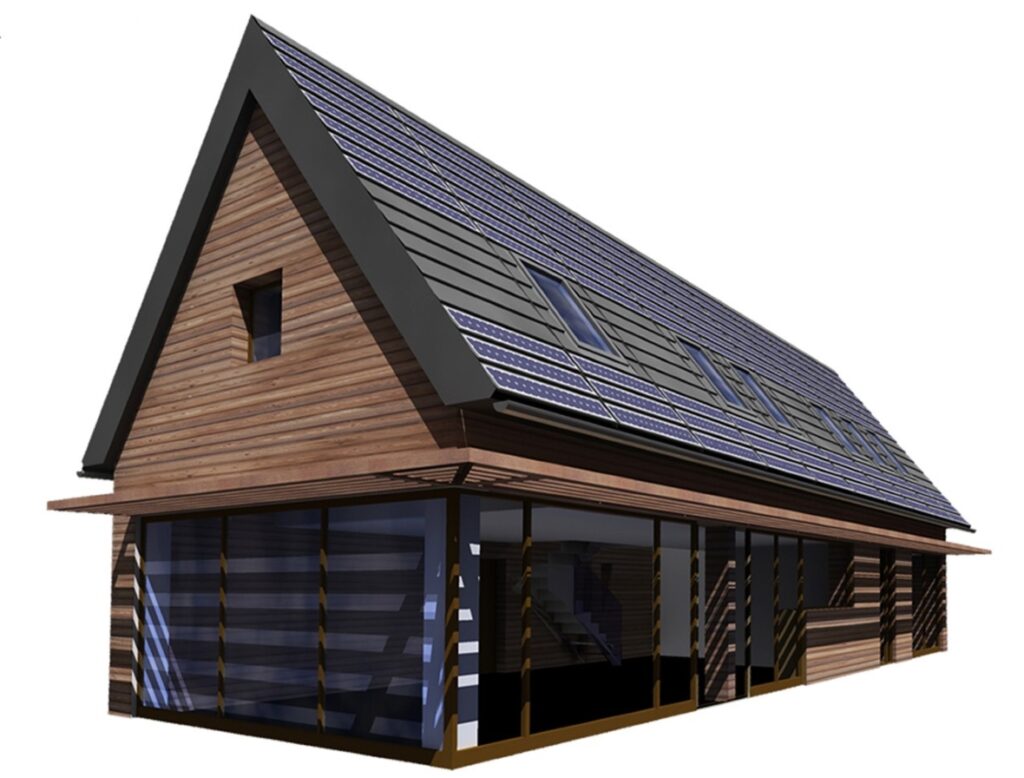
The proposed houses are very highly insulated and air-tight. Window and door openings are primarily to the south to make use of solar gains, and there are very few openings to the north. A heat recovery system allows fresh air exchange with little energy loss. Solar thermal panels provide domestic hot water and photovoltaic panels provide electricity. A very small heat pump provides back-up for space heating and hot water in extreme conditions.
These 7 new zero carbon dwellings on the Scottish island of Colonsay, which have been designed primarily for permanent occupation with the facility for home working, but with an equal suitability for use as self catering letting properties. This will be the first carbon neutral proposal for this island and is therefore an important step towards sustainable development for the future in such a remote community.
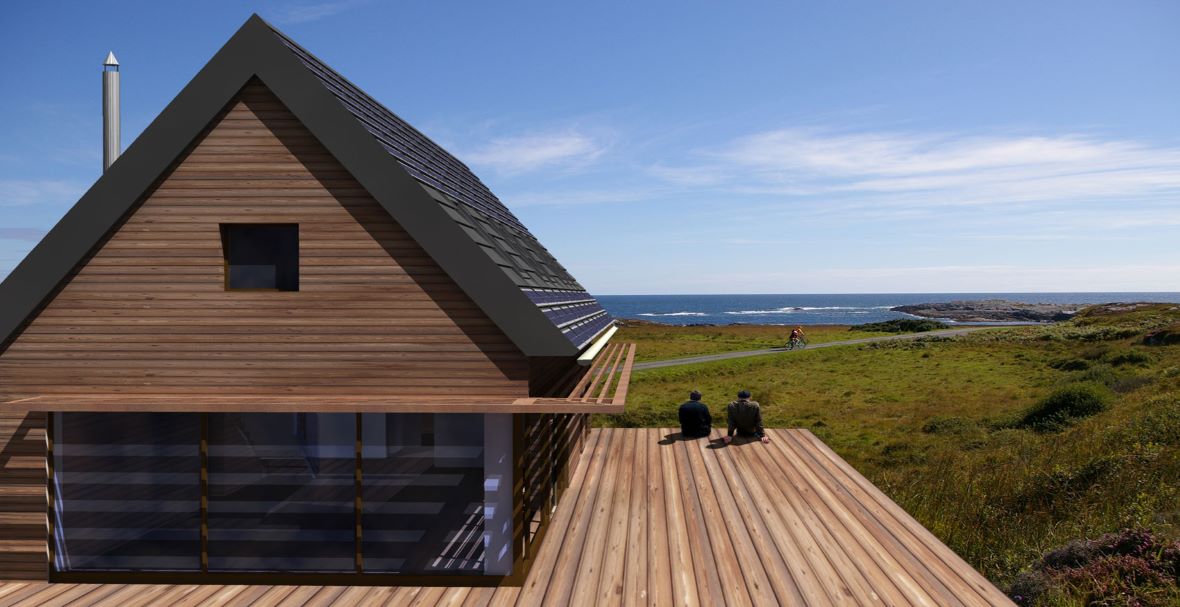
In a rich natural habitat such as Colonsay, the landscape features are diverse; a mixture of ancient and cultivated woodlands, moorlands, meadows, rough pastures, peat bogs and gorse, as well as cultivated farmland, make up the onshore island scenery.
Traditionally for the region, the siting characteristics of most vernacular buildings are drawn from local knowledge on climate, materials and landscape; including design features such as shelter belts of trees, siting in the lee of hills etc. Local vernacular buildings show two predominant external finish materials in white render and grey slate.
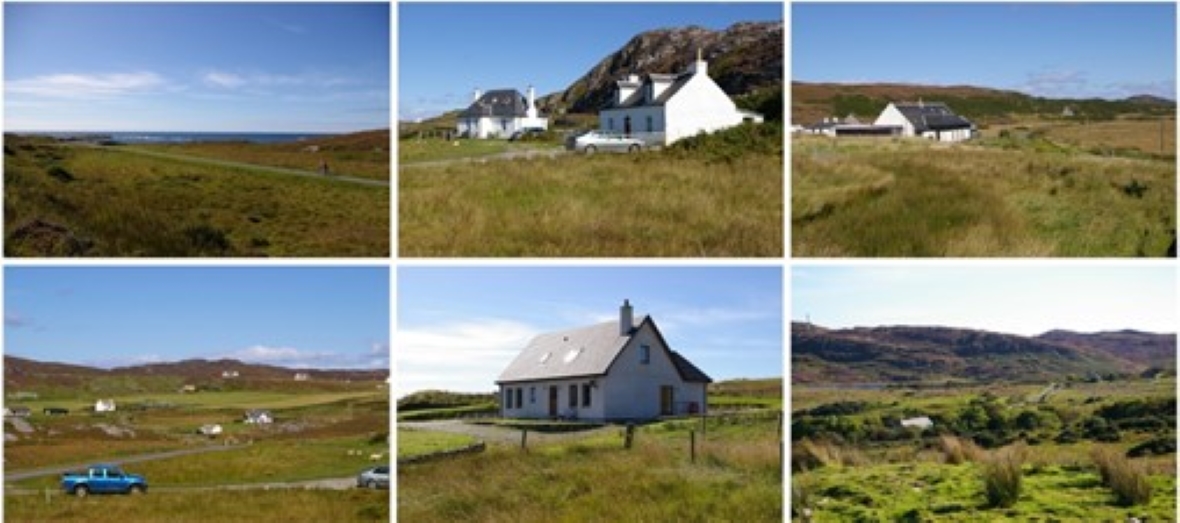
The buildings are designed to be pre-fabricated. This is due to the high cost of importing materials on the ferry, as well as the expensive travel cost and impracticality of importing specialist labour from the mainland. The aim is to fabricate the houses (subdivided in 4/5 transportable modules) off-site, helping to achieve greater economy and higher standards of detailed specification and air tightness.
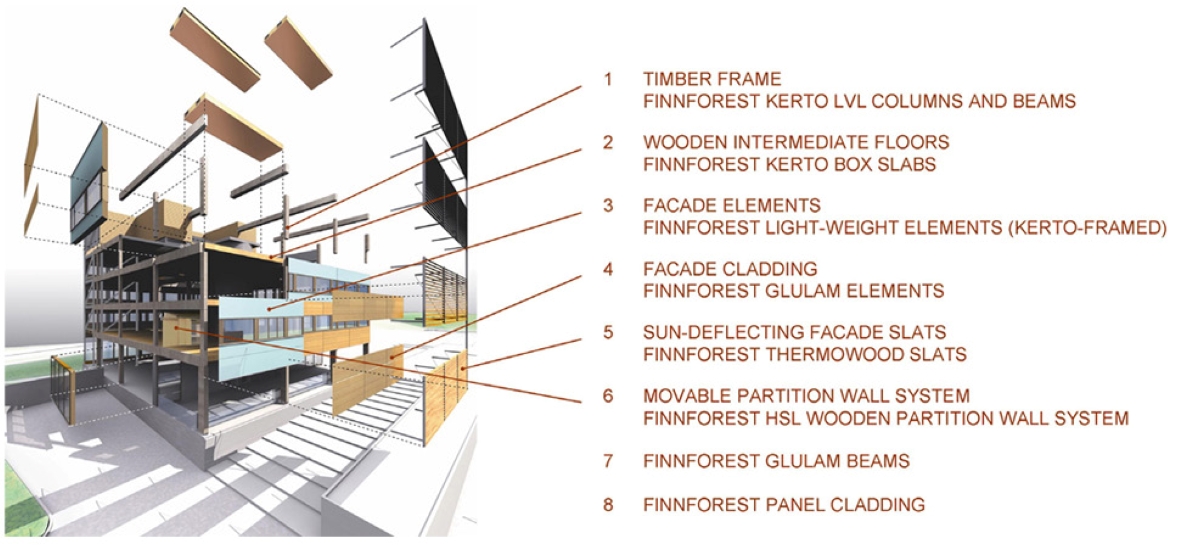
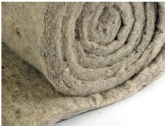
superinsulation
The buildings employ sheepswool insulation to reduce heat loss through walls, roof and floor (U-value 0.1 – 0.15 W/m’K).
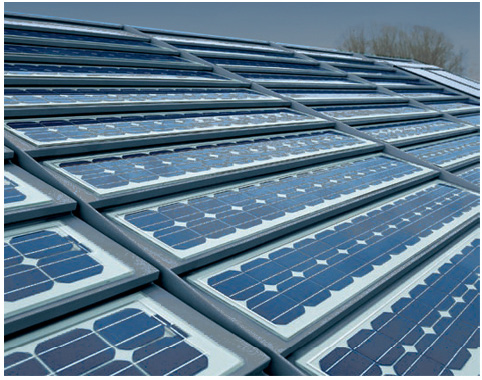
Solar roof: Photovoltaic & solar thermal integrated roof system
Solar panels installed on the south facing roof slope produce enough electricity to supply the electrical needs of the house. Solar thermal elements supply hot water.